

The critical care service capability framework for Victoria aims to guide how critical care services are delivered safely and sustainably across Victoria’s public health system.
It helps ensure people who are critically ill, or at risk of deterioration, receive the right level of care, in the right place, at the right time.
The framework sets minimum standards for adult and paediatric critical care services. It supports service planning, development and transparency across the system.
What is critical care?
Critical care is provided to patients who are critically ill or at risk of rapid deterioration and need:
- intensive monitoring
- advanced clinical support
- specialised or life‑sustaining interventions.
Critical care services operate 24 hours a day, 7 days a week. They play a vital role in responding to serious illness, injury and complex medical needs.
About the framework
The critical care service capability framework:
- defines four levels of critical care capability (Levels 3 to 6)
- applies to adult and paediatric critical care services
- sets out the minimum requirements health service sites must meet consistently and sustainably.
Each capability level builds on the one below it. Higher levels reflect increasing patient complexity, clinical risk and service capability.
Adult and paediatric services are assessed separately. This recognises differences in patient populations, workforce requirements and models of care. A health service site may therefore assess that they hold different capability levels for adult and paediatric critical care.
Who the framework applies to
The framework applies to Victorian public health services that provide continuous critical care.
Adult services
This includes:
- intensive care units (ICUs)
- critical care units in sites without an ICU.
Children's services
This includes:
- paediatric intensive care units (PICUs)
- combined adult ICUs that provide care for children
- paediatric ward based high acuity care areas.
Using the framework
Health service sites use the framework to understand and define the level of critical care they can safely and sustainably provide, 24 hours a day, 7 days a week.
The framework sets minimum standards across five areas:
- clinical governance
- workforce
- infrastructure
- equipment
- clinical support services.
These standards apply across four levels of critical care capability (Levels 3–6).
Figure 1: Tiered system of adult critical care services
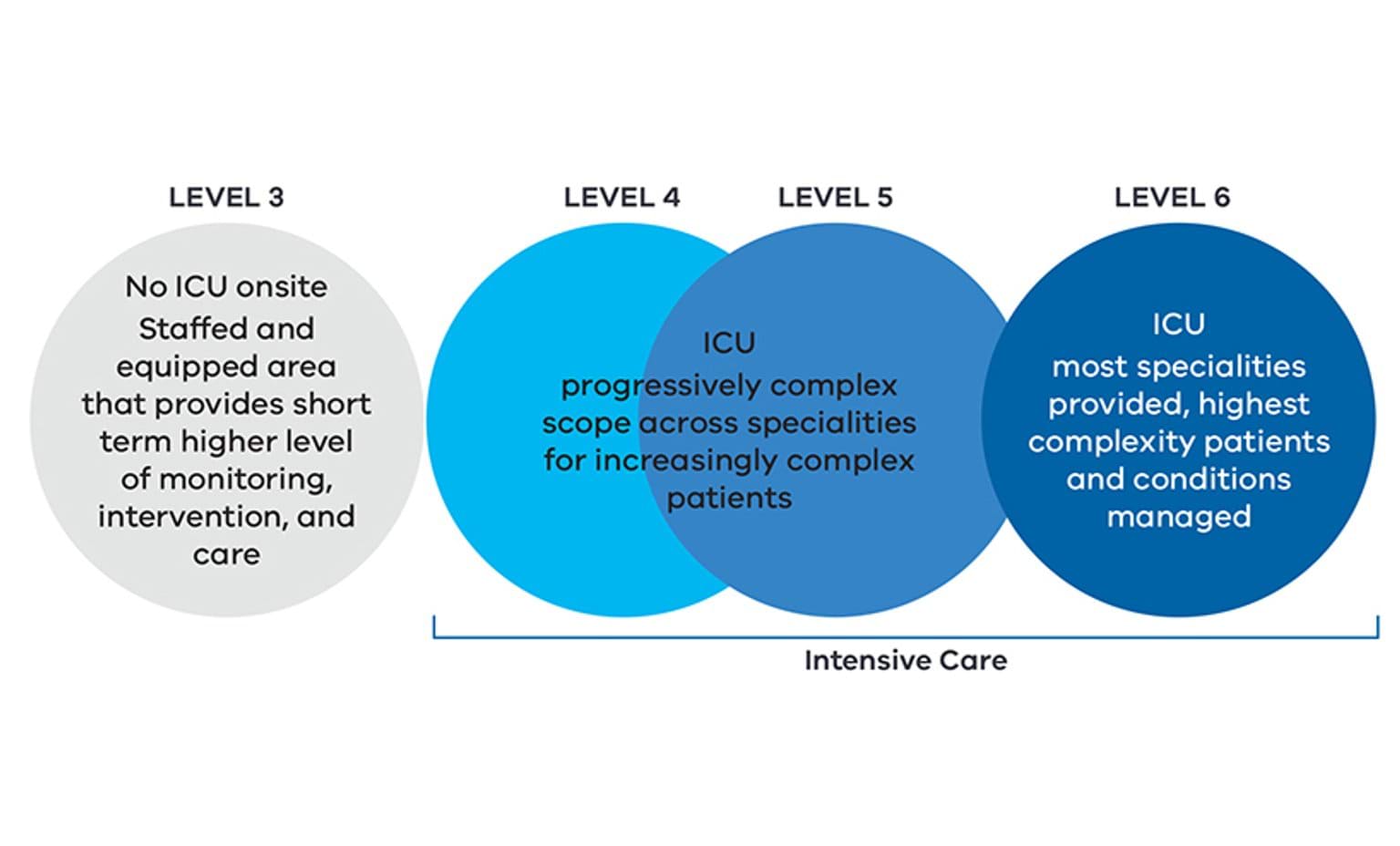
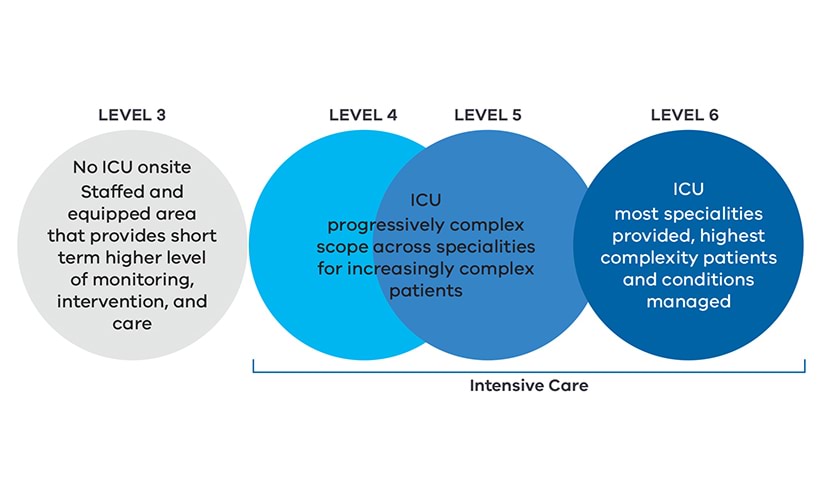
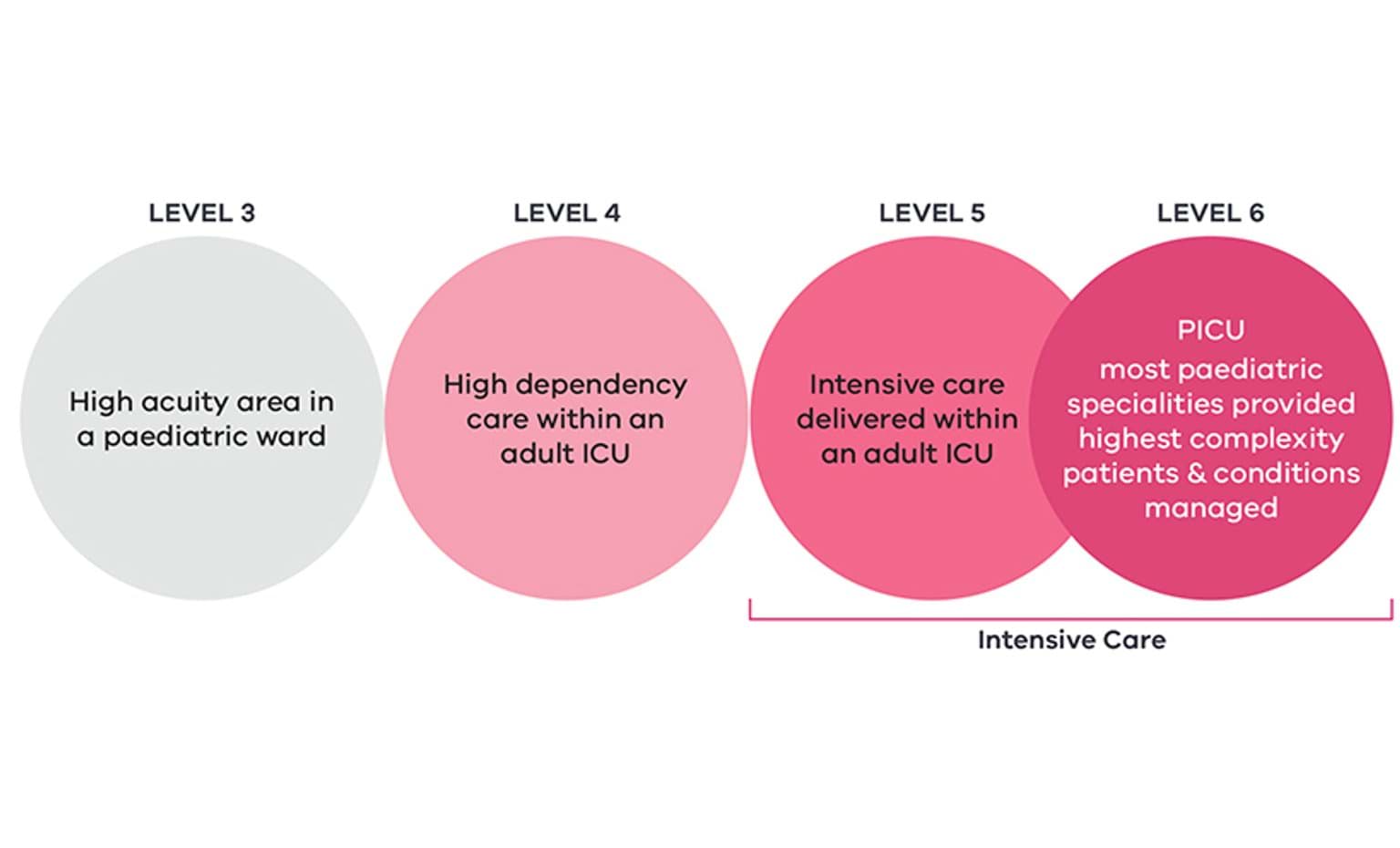
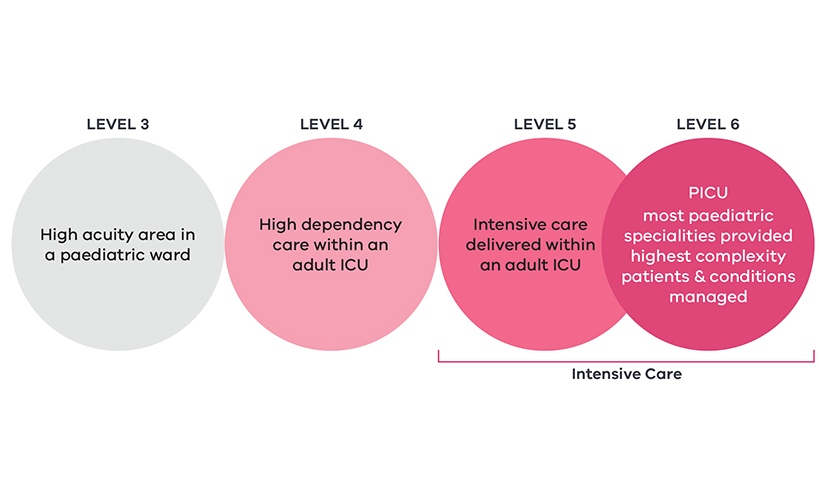
Figure 2: Tiered system of paediatric critical care services
Key points:
- adult and paediatric services are considered separately
- capability may vary across sites within a single health service
- levels 3-6 paediatric services reflect Victoria’s centralised paediatric intensive care model, supported by regional and metropolitan services caring for moderately unwell children.
A networked approach to care
The framework encourages a networked model of care across regional and statewide services.
This approach helps ensure:
- care is delivered as close to home as possible, where safe and appropriate
- timely consultation with higher‑level services
- clear escalation and transfer pathways when patient needs exceed local capability.
Aims of the framework
The framework aims to:
- support the delivery of safe, high‑quality critical care
- help health services make informed decisions about service configuration, partnerships and escalation pathways
- support local,regional and statewide planning in response to community need.
Guiding principles
The framework is guided by these principles:
- care is patient‑centred and delivered as close to home as possible
- the different needs of adult and paediatric patients are recognised
- consultation, referral, escalation and transfer processes are clear and effective
- health service capabilities are clearly communicated to clinicians, patients, communities and partner services.
Determining capability levels
Health service sites that provide continuous critical care services should self-assess their capability level based on the services they provide. At all times safe, patient-centred and appropriate health care should be provided.
Capability levels may be discussed with health service sites, in partnership with Safer Care Victoria, as part of routine performance activities.
Paediatric critical care capability
Paediatric critical care has specific workforce, clinical and infrastructure requirements.
As a result:
- paediatric capability is assessed separately
- health service sites should clearly define and document their scope of care for children.
Paediatric capability levels reflect:
- clinical case mix and patient complexity
- volume of activity
- transfer patterns
- respiratory and life‑support capability.
This continuum of care is outlined in Table 2 of the framework.
Statewide designated services
Some Level 6 critical care services also deliver statewide designated clinical services, such as:
- solid organ transplant services
- major trauma services
- specialist burns services.
The framework does not designate these services. It defines the minimum standard expected of any health service operating sustainably at a given capability level.
Development of the framework
The framework was developed by an expert advisory group consisting of:
- senior clinicians and clinical experts from health services across Victoria
- representatives from different clinical organisations and disciplines
- consumer representatives.
The framework is informed by:
- clinical evidence and best practice recommendations
- safety and quality considerations
- workforce and service sustainability
- patient access and equity.
Framework resources
More information
The framework should be read alongside:
Updated